Choosing a PR agency in Paris: what an international brand should expect in 2026
Paris is home to almost every French national newsroom: dailies, magazines, tech sites, TV channels and radio stations. Hiring a PR agency in Paris means buying access to that ecosystem, but also a method, a team and a reporting standard. This guide is for marketing directors and country managers comparing agencies, especially brands entering or scaling in France: what to demand, what it costs and which signals should raise a red flag.
Why hire a PR agency based in Paris?
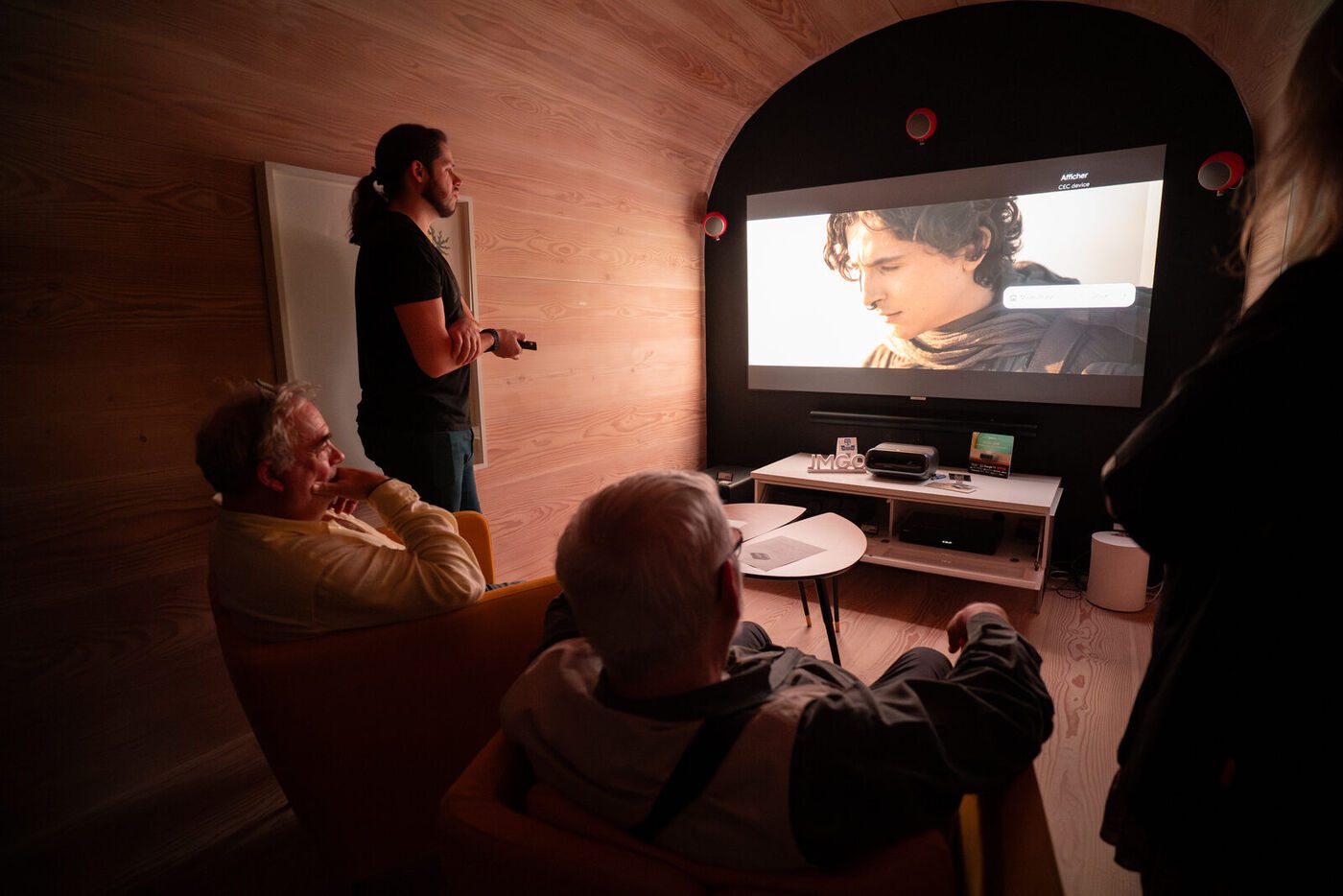
France's national newsrooms are almost all in Paris or its inner suburbs. The journalists who decide on a review, a comparison or a slot on the evening TV news meet there every week: product briefings, press lunches, showroom demos. A Paris-based agency can set up a meeting at short notice, hand-deliver a press loan and sit down with an editorial team without waiting for a trip from abroad.
Proximity is not enough. What counts is detailed knowledge of each newsroom: who reviews what, how often, and on which deadlines. That knowledge is what turns a press release into an article.
How does the Paris media scene work?
A consumer tech, home, sport or lifestyle brand does not pitch “the French press”. It addresses several families of media, each with its own logic.
National and business press
Le Monde, Le Figaro, Le Parisien, Libération, 20 Minutes, Les Échos and La Tribune cover brands through usage, the market or the company. An interview with a senior executive, proprietary market data or a social trend opens these doors. A product sheet rarely does.
Tech and consumer electronics press
Les Numériques, 01net, Frandroid, Numerama, Clubic, Tom's Guide France and Journal du Geek publish reviews, comparisons and buying guides. These newsrooms expect early access to product, accurate spec sheets and contacts who answer fast. Their articles weigh directly on the purchase decision. Go further: tech press relations.
Home, interiors and lifestyle
Elle Décoration, Marie Claire Maison, Côté Maison and AD France, as well as Elle, Madame Figaro, GQ, and L'Équipe for sport. These titles think in styling, trends and seasons. Monthlies work several months ahead: a Christmas gift guide is planned in the summer.
TV and radio
The consumer and tech segments of TF1, France 2, M6 and BFM TV, and radio stations such as France Inter, RTL, Europe 1 and RMC. Television needs an angle, a media-trained spokesperson and footage. It never runs a press release as it stands.
Key dates in the calendar
- International trade shows covered from Paris: CES in January, MWC in February–March, IFA in September.
- Paris events: VivaTech in June, Maison&Objet in January and September, Paris Games Week in the autumn.
- Retail seasons: French Days, Mother's and Father's Day, back-to-school (la rentrée), Black Friday, year-end gift guides, the sales.
A serious agency builds the PR plan around this calendar, market by market, not mailing by mailing.
How do you assess a PR agency in Paris?
1. The seniority of the team that delivers
Ask who will pitch your stories day to day, not just who presents the proposal. A team of former journalists and former brand-side people understands what a newsroom expects and what headquarters demands. Ask for names and backgrounds at the pitch stage.
2. Real, verifiable media relationships
A journalist database is a professional tool every serious agency uses. It does not replace a relationship. Ask for recent coverage in your category, with the title and publication date. A good test: ask the agency about three journalists who matter to you. Its answers show whether it actually knows them.
3. A written method
Perception audit, key messages, a plan per media family, a press-loan calendar, a cadence of announcements, embargo management. The method should fit on a few pages and apply from month one.
4. Reporting on share of voice and sales
Coverage counts are not enough. Reporting must single out tier-1 articles, measure share of voice against your competitors and, when media embed shopping links, connect coverage to clicks and sales. That is what media affiliate marketing delivers: reviews and buying guides carry tracked links.
5. The ability to extend press coverage
A published review can be picked up by creators, comparison sites and deals sites. An agency that coordinates Press Relations, Creator Marketing and affiliate marketing spares the brand from managing three suppliers.
How much does a PR agency in Paris cost?
Agencies generally bill in three formats: the one-off project (a launch), the monthly retainer and, less often, the consulting day. For a product brand, the retainer remains the most effective format: newsrooms work over time, and a brand that disappears after its launch loses its place in comparisons.
At JAIA, PR programmes start from €3,500 excl. VAT per month, on 6–12 month retainers. The budget depends on a few concrete variables:
- the number of markets covered (France alone, or France, the Benelux and the UK);
- the number of launches and key moments in the year;
- press events, press trips and demos;
- press-loan logistics (shipping, tracking and return of products);
- amplification through creators and affiliate marketing, priced separately.
The formats are detailed on our PR agency pricing page. One piece of advice: compare proposals on a like-for-like scope (markets, key moments, reporting), never on the monthly fee alone.
What are the red flags before you sign?
- Guaranteed coverage. No agency decides on behalf of a newsroom. A promised number of placements signals either disguised advertising or low-quality sites.
- Pay-per-article. Paying for coverage creates a conflict of interest and damages the relationship with journalists.
- A senior team at the pitch, a junior one afterwards. Get it in writing: who works on your account.
- A contact list sold as the agency's value. Databases can be bought; knowledge of newsrooms cannot.
- Reporting limited to a press review. Without tier-1, share of voice or a business reading, you cannot defend the budget to headquarters.
- Advertising value equivalency. AMEC's Barcelona Principles, the industry benchmark, advise against using it as a measure of value.
- No plan per market. The same press release translated for Paris, Amsterdam and London delivers little.
What do the first three months with a PR agency look like?
The first weeks say a lot about an agency's quality. A serious team broadly follows this sequence:
- Month one: scoping. Audit of existing and competitor coverage, key messages signed off, priority media list per family, calendar of key moments and press loans, share-of-voice baselines.
- Month two: first announcements. Meetings with key newsrooms, products under review with tech journalists, first stories pitched to national and lifestyle titles.
- Month three: first reading. Coverage secured, share of tier-1 articles, change in share of voice, first tracked clicks and sales where media embed links. The plan is adjusted on this data.
Ask for this sequence in writing in the proposal. An agency that cannot say what it will do in month one will struggle to deliver a twelve-month programme.
Why run the Benelux and the UK from Paris?
Many international brands open France, then Belgium, the Netherlands and the UK in the same year. More local agencies means more reports, more messages and more calendars. Central coordination from Paris gives headquarters a single point of contact and a single dashboard.
This coordination only works with local teams. Dutch media (Tweakers, De Telegraaf, NRC), Belgian media (Le Soir, De Standaard, L'Echo) and British media (TechRadar, T3, Stuff, The Guardian) have their own codes, calendars and languages. The plan is set in Paris; execution happens close to the newsrooms. Our PR agency for international brands page explains how it works.
JAIA is a Press Relations agency based in Paris (9th arrondissement), founded by Katia Tran-Saïdani, former Head of PR at Les Échos, ex-Honor and ex-TCL. Marie, Senior PR Lead, coordinates multi-market programmes. Dimitri, PR Lead Netherlands and Benelux, has 20+ years in PR and is a former tech journalist. Eliott, PR Lead UK, was a journalist at Tom's Guide.
Every programme is measured in one report: coverage, share of voice and, through Impact.com, tracked sales. For JMGO, the programme delivered 209 pieces of coverage, including 89 tier-1 articles, in 7 months, and tripled share of voice in two months. Read the JMGO case study.
FAQ
Fees depend on the number of markets, launches and the level of support. At JAIA, PR programmes start from €3,500 excl. VAT per month, on 6–12 month retainers.
Yes, for considered purchases. Tech, home and lifestyle media have their own journalists, calendars and review formats. A specialist agency knows which titles count and when to approach them.
First coverage often lands in the opening weeks of a launch. A regular presence in comparisons and buying guides builds over 6–12 months.
No. The decision to publish belongs to the newsroom. An agency commits to a method, a cadence of announcements and reporting, not to a number of articles.
Yes, if it has local PR leads. The plan and reporting are centralised in Paris; relationships with newsrooms are managed on the ground, in the market's language.
Let's build your press relations strategy.
JAIA Global — The Press Relations agency for consumer tech, home, sport & lifestyle brands, extended by Creator Marketing and affiliate marketing. Paris · Benelux · UK.
7 rue Meyerbeer, 75009 Paris
contact@jaiaglobal.com